Originally compiled by Jeremy Brook at Airfix Collectors Club, edited by Dan Parish
The term “type” refers to the layout, artwork and design of the header card or box. The header card is the piece of folded paper that is stapled to the top of the plastic bag that contains the kit parts. On the front of the header card is the name of the kit and a picture of the model. On the reverse side is a description of the real item. Inside are the assembly instructions. Airfix changed the design of its header cards and boxes over the years. It’s from the design of the header card that you can determine the age of the kit, and hence its rarity, collectability and possibly, value.
The following is not a comprehensive catalogue of Airfix types. We will not try to describe all the various “flavours” of each type. There are, for example, variants known as “type 2a” or “type 3b”.
Airfix models were first available in the early 1950s and the plastic bag headers were of various styles until about 1956/7 when they standardised on the Type 1. Enthusiasts refer to all these early designs collectively as “Type 0”. A good example of a Type 0 is the “scroll-style” header cards on the early ship series like the Santa Maria etc.
Header Card Types
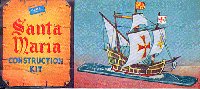
This is an example of a Type 0 header, from the early ship range. There are actually two slightly different versions of this type of Ship “scroll” header card, the second version being more close to the classic Type 0 header shown below.
The first five small classic ship kits issued from 1954 to 1955 (Golden Hind, Santa Maria, HMS Shannon, HMS Victory and Cutty Sark) had their own unique style. These were later changed to Type 1.
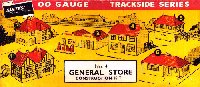 Header. The first six trackside kits issued in 1957 (Country Inn, Detached House, Service Station, General Store, Signal Box and Bungalow) had their own unique style. These were later changed to Type 1.
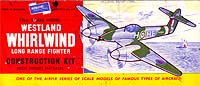 Header. The artwork is a crude line drawing, and the design is split into red and white halves. The Airfix logo is a scroll which also contains the words “Products in Plastic”. Because of their age, these early Type 1 are real collectors items now. Header cards by themselves (no kit!) trade at almost £10 each.
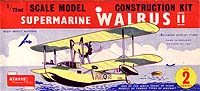
Later Type 1s for the Series 2 kits were a more sophisticated style, but the artwork is still pretty simple. The example shown (Supermarine Walrus) is a Series 2 aircraft kit. As these kits were physically bigger than most Series 1 kits, the plastic bags and hence the Header Cards are also of a larger size. Original Series 2 were plastic bags, but quickly changed to boxes. Series 2 plastic bags are therefore something of a rarity and should be treated with respect!
The first six Series 2 kits issued from 1957 to 1959 (Mosquito FB.VI, Walrus Mk.II, Beaufighter TF.X, P-38J Lightning, Swordfish Mk.II, and Messerschmitt Me110D) had their own unique style. The first two (Mosquito FB.VI and Walrus Mk.II) were also issued in Type 1 headers.
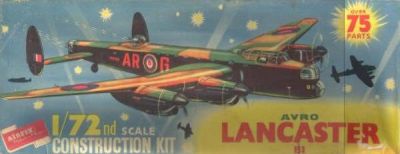 Type 1B Box. The first three Series 4 and 5 kits issued from 1958 to 1959 (Lancaster B.I, Wellington B.III and Bristol Superfreighter) had their own unique style.
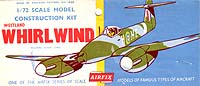 This Type 2 style was introduced in about 1959. The card is again split vertically in two colours with another vertical coloured stripe between the two halves. The Airfix logo loses the words “Products in Plastic”. A variant of the Type 2 had a multicoloured vertical stripe — this was usually seen on the military vehicle series.
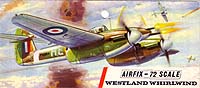 The Type 3 was introduced in the Autumn of 1963. It is the most well known style of plastic bag kit as this design lasted into the 1970s. Almost the complete sheet is taken up by the brilliant artwork of Roy Cross. “Airfix – 1/72 scale” with the model’s name occupies a small white-background segment. There are two main variants of the Type 3 — one in which the Airfix logo has a background of thin black stripes and another where the kit name appears separately super-imposed on the artwork.
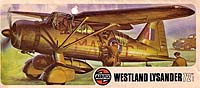 The Type 4 was the last plastic bag design before the blister packs were introduced in 1973. The Type 4 plastic bag is not well known. Although I know of one person who only collects Type 4 kits, there are also keen Airfix people who never realised that the Type 4 bag existed. I believe the Type 4 was only used on 3 kits — this Lysander, the Brewster Buffalo and the Cessna Bird-Dog.
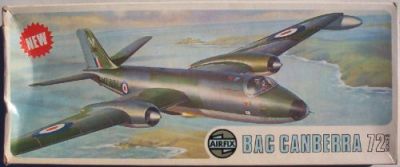 Better known, coloured logo. 1972 to 1975.
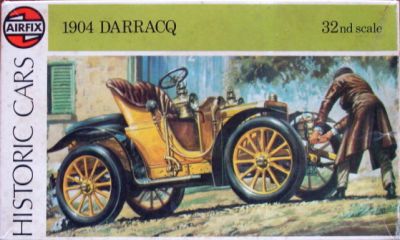 (HC) for Historic Cars. 1973 to 1978.
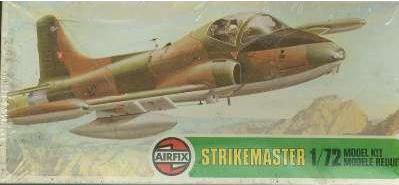 Box. Round logo. Series 2 only. Different scale format, colouring and the addition of Model Kit/Modele Reduit. 1975 to 1977.
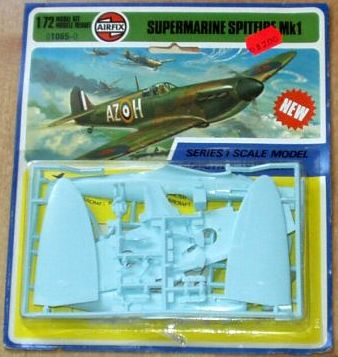 (B) for Blister Pack. 1975 to 1979.
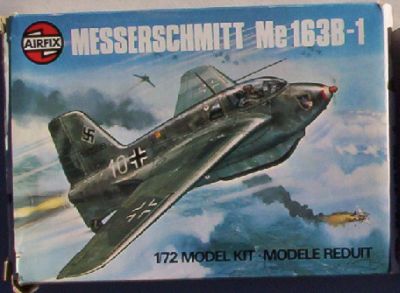 All series, except for Series 2. Note the swastika on the tail! 1975 to 1979.
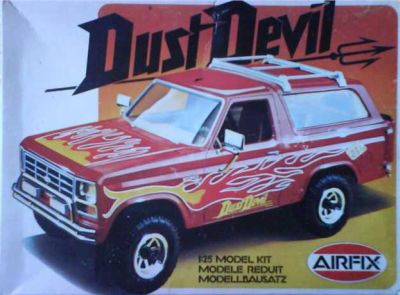
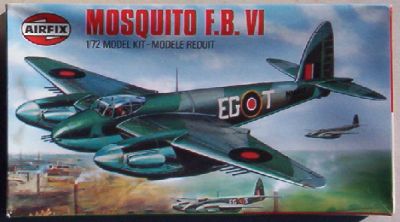 Oval logo. 1978 to 1981.
 New oval logo. Appeared for a short time only on some MPC car kits. 1982.
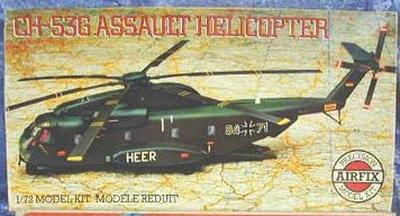 Precision Model Kit logo. 1980 to 1982.
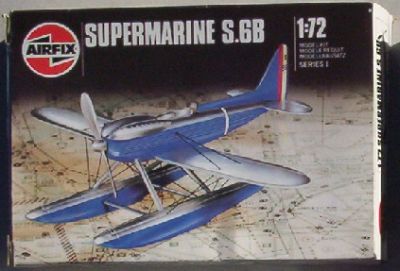 Registered logo. 1982 to 1987.
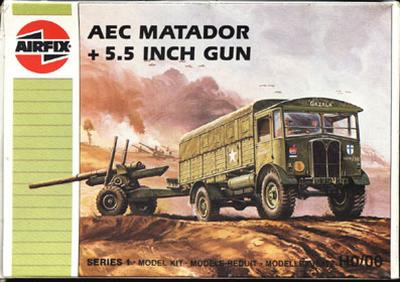 1987 to 1989.
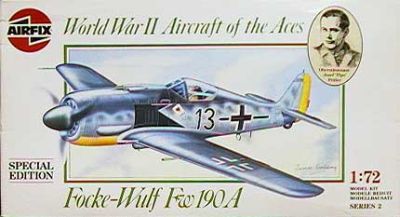 Special Edition. Includes Vintage Aircraft, WWII Aircraft of the Aces, Historic Cars, Classic Airlines, and Modern Airlines. 1987 to 1997.
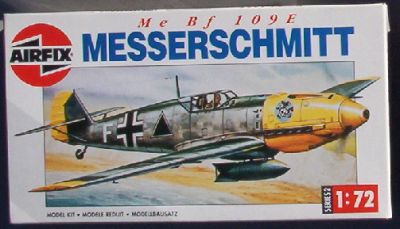 Variations include flying hours token on front, website and angled logo. 1990 to 1994.
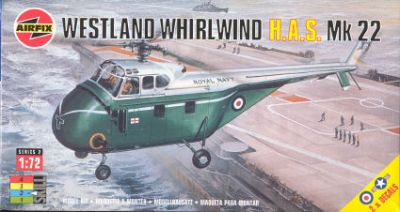 Angled logo. Variations include angled button logo and website. 1994 to 2003.
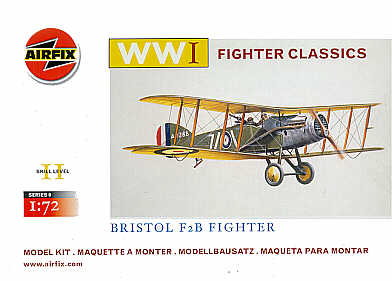 WWI Fighter Classics. 2001 to 2003.
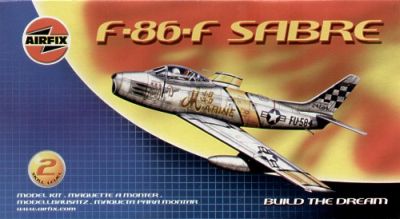 Build the Dream. 1998 to 2003.
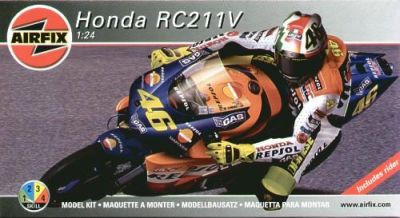 Two kits only: 1/24 Honda RC211V and 1/43 Subaru Impreza WRC’02. 2003.
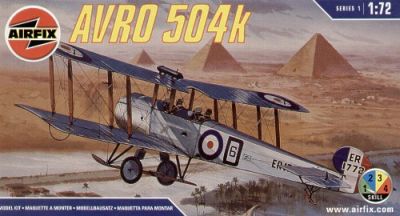 2004.
2004.
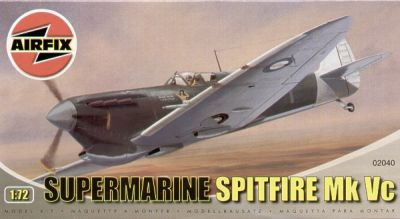 From 2005 to 2009.
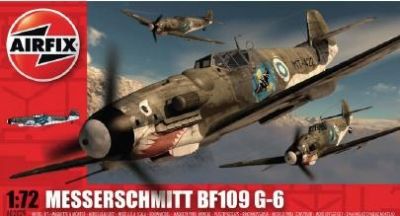 From 2009.
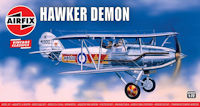 From May 2018 this design is used for the release of the “Vintage Classics” range of pre-Hornby designed models.
And, of course, there are other minor flavours and varieties. Changes from one type to another was not consistent across the ranges, and the Catalogues add to the confusion because sometimes old photographs were used, incorrectly suggesting a style lingered on into later years.
Boxes followed the styles of the Type 2, Type 3 and Type 4 in approximately the same time frame. Additional information on box types follows:
Box Types
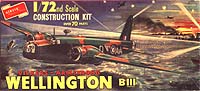 The term “type 0” is generally applied to any box style before the standardisation on the distinctive type 2 below. There are no known “type 1” boxes, this style being reserved for the plastic bag kits only.
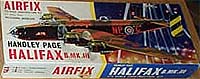 Applied consistently across the range, Type 2 boxes are easily identified by their vertical stripe. The stripe was sometimes multi-coloured as seen with the Fokker F-27 Friendship kit (generally, the colours of the stripe depicted the national origin of the kit’s subject).
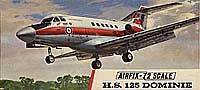 The classic Airfix Type 3 box. 1963–1973.
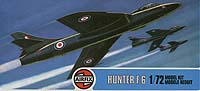 The Type 4 is characterised by the new round logo and kit name being in a corner box panel. 1973–197?
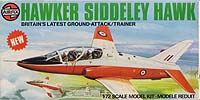 The Type 5 featured a full-top artwork. Available up to 1977.
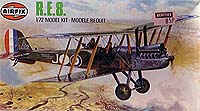 The Type 6 featured the short-lived Airfix oval logo. Otherwise it was similar to the previous Type 5. The Type 6 box remained in production until the early 1980s.
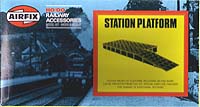 The amazingly ugly Type 6a was issued for the HO/OO trackside range only.
Precision Model Kit — the short-lived Airfix box introduced in 1981, the year that Airfix went bust. Many of the kits seen in the very rare 1981 catalogue were briefly marketed in Type 7 boxes. When Airfix re-appeared after its collapse, the Type 7 box quickly disappeared.
The amazingly ugly Type 6a was issued for the HO/OO trackside range only.
Precision Model Kit — the short-lived Airfix box introduced in 1981, the year that Airfix went bust. Many of the kits seen in the very rare 1981 catalogue were briefly marketed in Type 7 boxes. When Airfix re-appeared after its collapse, the Type 7 box quickly disappeared.
Here’s an early box that doesn’t seem to follow any style: